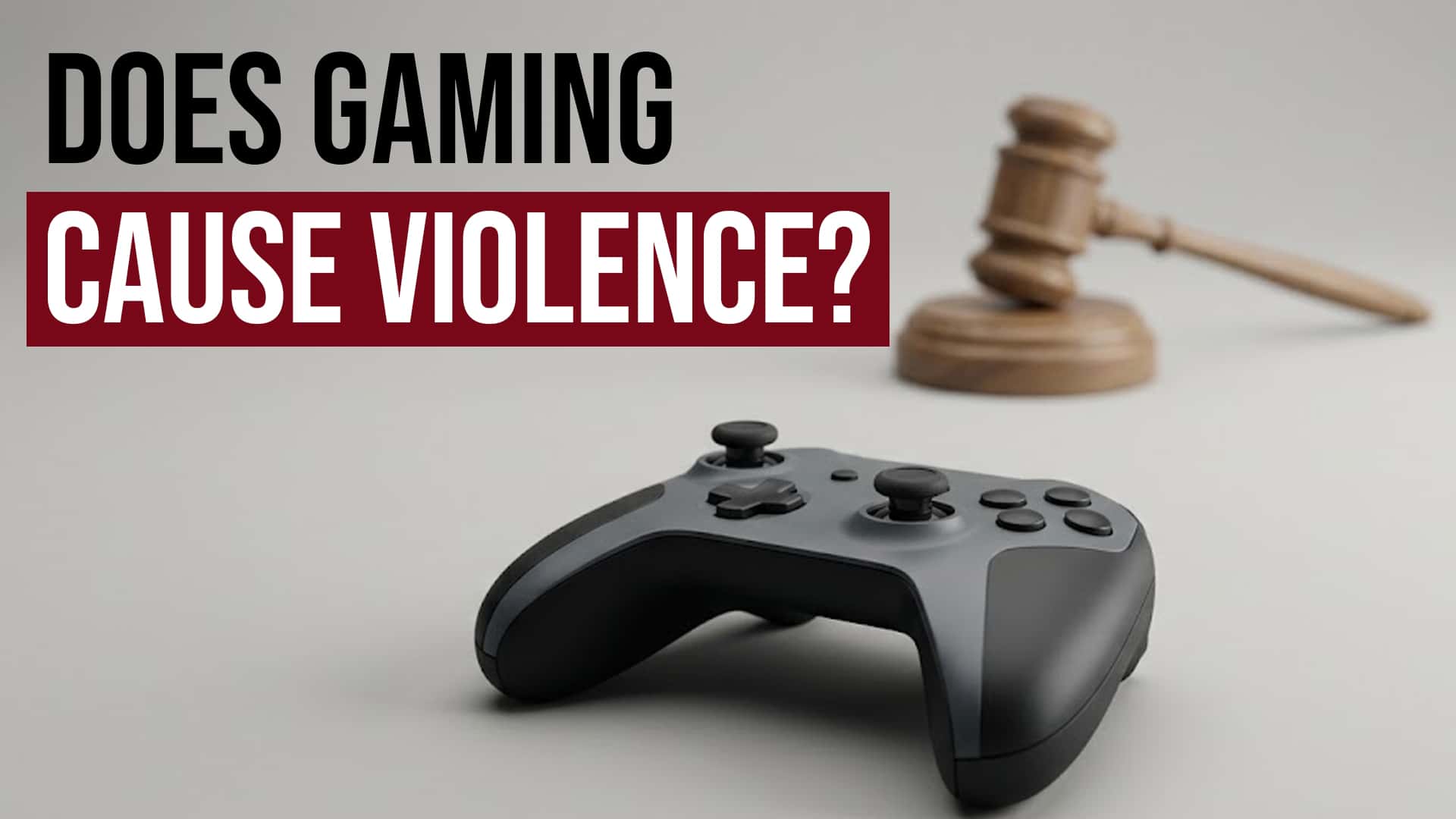
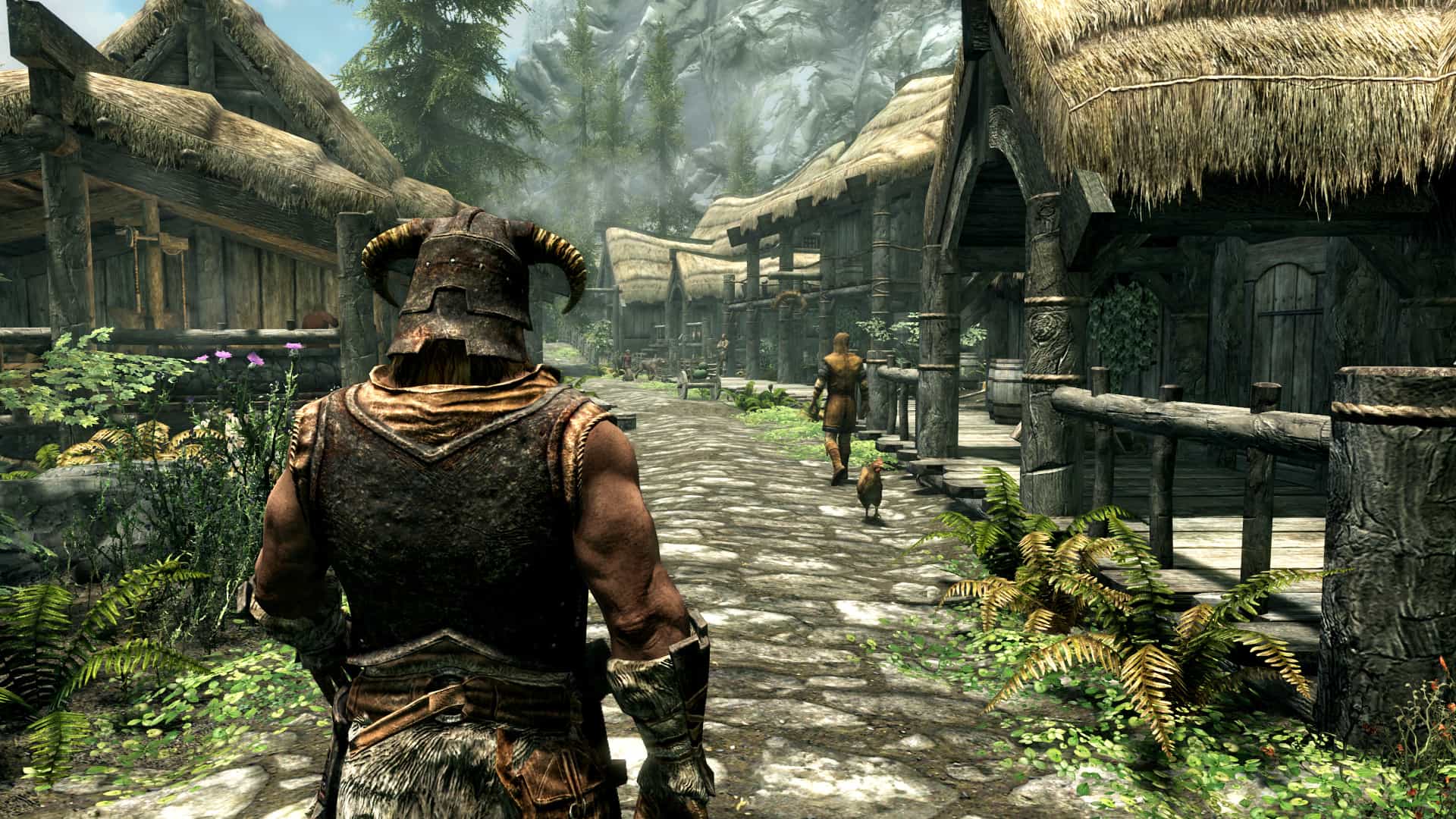
In the wake of a recent, deeply tragic incident of violence, a familiar and exhausting debate has resurfaced once again. Addressing these moments is incredibly difficult, and as a publication dedicated to covering video games, we recognize that we tread a very thin line. Writing about real-world harm can easily look like capitalizing on tragedy, and it is entirely fair for readers to question whether a gaming outlet can approach this highly charged topic with true objectivity. We want to be completely transparent: our goal is not to exploit a horrific event, nor do we ask you to blindly accept our perspective. Rather, as public discussion quickly pivots back to video games as a primary focus, we feel a responsibility to step back and carefully examine the history, structural precedents, and empirical science behind the video game violence hypothesis, allowing the documented facts to speak for themselves.
Over the decades, a vast body of psychological research and criminological data has emerged, with numerous studies demonstrating no direct correlation between video game exposure and real-world violence. While the academic community continues to debate the exact nature of media influence and the methodological limitations of behavioral testing, the popular narrative of a simple, direct link to aggressive behavior remains heavily contested by researchers. Yet, the moment a crisis occurs, the nuances of this scientific debate are often pushed aside in favor of easy explanations. This pattern of blame is not a modern creation, nor is it unique to our current generation of games. To understand why this cycle continues to repeat itself today, we need to walk through the history of how we arrived here, tracing how a young medium became society’s favorite target.
Game Violence is not Binary
Where do we draw the line, and how do we actually define violence in a video game? This is the fundamental question that complicates any attempt to treat virtual violence as a simple, black-and-white issue. In reality, interactive media does not fit into neat, binary categories of violent and non-violent. Instead, we find a massive spectrum of design, intent, and visual style. For instance, in a highly competitive tactical shooter like Valorant, players use firearms to defeat opposing teams in intense rounds. Yet, the game’s stylized, colorful aesthetic and focus on team-based strategy make it a global esports phenomenon rather than a grim simulation of harm and violence. Should we ban Valorant simply because weapons are involved? What about fighting games like Tekken or Mortal Kombat, where characters trade stylized, physics-defying punches and martial arts maneuvers?
If a government or regulatory body decides to apply a sweeping, universal ban on violent video games, they immediately run into a wall. Who decides what crosses the line? More importantly, who actually suffers when these sweeping bans are proposed? Large, triple-A gaming corporations have massive legal teams, lobbying power, and deep financial reserves to pivot, rebrand, or defend their intellectual properties in court. They will continue to thrive in global markets, including the Philippines. The true casualties of arbitrary, vague government crackdowns are the small, independent developers. Indie studios lack the resources to fight legal battles, pay high compliance fees, or re-engineer their creative visions to satisfy changing political moods. By attempting a broad crusade against games regulators ultimately target the most vulnerable, creative, and defenseless segment of the industry.
ESRB & PEGI
To navigate this, we must first recognize a fundamental truth: parents have entirely valid anxieties about what their children consume. In an era where video game visuals have progressed from blocky pixels to near-photorealistic digital worlds, it is completely reasonable for parents to worry about the impact of intense, mature themes on developing minds. No parent wants their child exposed to graphic imagery or adult themes before they are emotionally ready, and navigating this rapidly changing entertainment landscape can feel incredibly daunting.
This genuine concern is precisely why classification systems like the ESRB or PEGI were established. However, their role is often misunderstood. They were never created to act as government-mandated blunt instruments to ban art from shelves, nor were they meant to establish state-enforced censorship.
Instead, rating boards function much like the nutrition facts label on a cereal box. When you look at a food package, the government does not ban the product based on its sugar, sodium, or fat content. Instead, the label simply lists the ingredients and nutritional values clearly, allowing you to decide if it fits your family’s dietary needs. Video game ratings work in the exact same way. Rather than requiring a busy parent to watch a multi-hour YouTube playthrough or dig through online forums to understand what a game contains, a rating label offers a quick, reliable breakdown of the virtual ingredients inside, such as the level of violence, language, or interactive elements like in-game purchases. This transparency allows families to make active, informed decisions about what enters their homes.
Ultimately, this responsibility cannot and should not be outsourced to a state censor. Every family has different standards, and what is appropriate for one teenager might not be suitable for another. Rating systems empower parents to make these individual calls, placing the agency where it belongs: in the home, with the people who actually know the children best.
Why Do We Have ESRB
This entire system of self-regulation was born out of a dual necessity: answering the legitimate concerns of families while avoiding political overreach. In the early 1990s, the video game industry suddenly found itself in the political crosshairs. The explosive arcade and console debut of the original Mortal Kombat, with its realistic digitized blood and brutal fatalities, shocked parents who still viewed games as simple toys for toddlers. Competing game publishers realized that parents were rightfully demanding a clear way to understand what their children were playing.
However, rather than letting the state intervene, the industry took defensive action. In late 1993, US Senators Joe Lieberman and Herb Kohl launched highly publicized congressional hearings, threatening direct government censorship and federal oversight. Fearing that heavy-handed, state-mandated laws would strangle creative freedom and destroy their businesses, game publishers united. They formed the trade association that would eventually become the Entertainment Software Association and created the ESRB in 1994, choosing to police themselves before the government could do it for them.
The critical distinction here is that this rating system was built for parents, not for governments. It was designed to put the power of regulation directly into the hands of guardians to use in their own homes, not to serve as a legal framework for governments to ban, restrict, or criminalize the sale of games. This proactive model of self-regulation was so successful that it eventually inspired European publishers to establish their own unified system, PEGI, in 2003.
What the Science Actually Says
To understand how the scientific community views this issue, we must look to the research conducted by Dr. Christopher John Ferguson, titled The Good, The Bad and the Ugly: A Meta-analytic Review of Positive and Negative Effects of Violent Video Games. Ferguson’s work is crucial because it was designed to evaluate the total impact of these games by examining both potential cognitive benefits and the alleged risks of aggression, rather than focusing solely on a negative political agenda.
A central issue Ferguson highlighted in his review was publication bias. He demonstrated that academic journals frequently favor papers claiming to find a link between video games and aggressive outcomes, while burying or rejecting studies that find no correlation. This dynamic creates a skewed, unreliable perception of scientific consensus in the public eye.
However, the most significant contribution of Ferguson’s meta-analysis lies in its dual results. Once the data was systematically analyzed and adjusted for publication bias, his findings presented a balanced and nuanced reality, which he summarized clearly in the study’s abstract:
Results from the current analysis supported the conclusion that violent video game exposure is associated with increased visuospatial cognition. However, results of the current meta-analysis did not support a relationship between violent video game exposure and aggressive behavior.
– Ferguson, C. J
Ferguson, C. J. (2007). The good, the bad and the ugly: A meta-analytic review of positive and negative effects of violent video games. Psychiatric Quarterly, 78(4), 309-316. https://doi.org/10.1007/s11126-007-9056-9
This outcome demonstrates that gaming is not a one-way street to real-world violence. In fact, engaging with fast-paced, complex digital spaces can help train a player’s spatial visualization, attention, and visual processing skills. The science reveals that video games are sophisticated interactive tools that can positively engage our cognitive abilities, while the popular, long-held theory linking them to real-world aggression lacks systemic empirical support.
Why Video Games are Easy Targets
If both history and hard science support the safety of video games, we are left with a question: why do they remain such an exceptionally easy target for blame? The answer does not lie in the inherent danger of the medium, but rather in a set of social, cultural, and political dynamics that make gaming uniquely vulnerable to public finger-pointing.
It is the First “Culprit” of Social Isolation
First, video games are a highly visible behavior that outsiders often notice when someone is struggling. People who are emotionally or psychologically distressed frequently withdraw from in-person social life and turn to games as a coping mechanism or escape. To an outside observer, the hours spent gaming become the most obvious thing to point at.
This creates a classic correlation fallacy. Society mistakes the symptom for the cause. Instead of examining deeper issues such as mental health, family environment, or social disconnection, it is easier to blame the game. In reality, the vast majority of gamers, including those who play heavily, do not commit acts of violence. The games are not driving the isolation into aggression. They are simply the most noticeable activity in a much more complicated picture.
Politically Non-Essential Priorities
Second, entertainment media occupies a highly vulnerable tier in public policy. When governments assess national priorities, they rightfully rank vital pillars like education, public safety, job creation, and economic health at the very top. Video games and interactive entertainment sit at the absolute bottom of this hierarchy. Because gaming is viewed as culturally non-essential, politicians and the public find it remarkably easy to suggest restrictions or outright bans. It is a sector that can be heavily regulated without risking economic collapse or disrupting essential public utilities, making it a low-risk, convenient target.
Generational Gap
Third, a profound generational gap continues to fuel moral suspicion. The loudest voices calling for the restriction of video games are almost never gamers themselves. When individuals do not personally engage with a medium, it is remarkably easy to view it as an alien, external force. This lack of familiarity naturally breeds moral suspicion.
We have seen this exact pattern play out historically with comic books, rock music, and movies. Interestingly, the very generation of lawmakers and commentators who currently lead the charge against video games are often the ones who grew up consuming those earlier, contested media forms. They lived through, and ultimately dismissed, the moral panics of their own youth, recognizing that a comic book or rock music did not make them dangerous. Yet, because video games are the youngest creative medium, a new boundary has been drawn. Those who successfully normalized the controversial pop culture of the twentieth century often do not play games themselves. Lacking personal exposure, they treat video games as an unfamiliar, external threat, repeating the exact same patterns of moral panic they once disproved in other mediums.
Low Cost Symbolic/Performative Action
Fourth, targeting video games offers immense symbolic policy value to politicians. When a tragic event occurs, there is intense pressure on the government to act and show responsiveness to public grief. However, addressing the actual, systemic root causes of violence requires massive structural reform, substantial financial resources, and difficult legislative battles. Passing laws to restrict or condemn video games, even if supported by weak or non-existent evidence, is politically cheap. It allows public figures to signal immediate, decisive action to their constituents without having to do the hard, expensive work of repairing broken social systems.
Why Dispelling the Myth Matters
It is easy to assume that defending video games against these accusations is merely an exercise in protecting a commercial industry. But the truth is that the video game industry does not need our protection to survive. It is a massive, highly resilient global force that has repeatedly proven its ability to adapt. If governments succeed in passing sweeping regulations or banning certain types of content, the industry will adjust, developers will pivot, and the medium will continue to thrive and make its presence known.
Dispelling this misconception is not about saving games. It is about public interest. When we allow ourselves to believe that real-world violence can be explained away by gaming, we distort our collective understanding of real, systemic issues. Attributing real-world harm to a game shifts public attention, resources, and vital policy debates away from the factors that actually drive human tragedies, such as mental health access, robust educational support, and family stability.
Bad assumptions inevitably lead to bad policies. When lawmakers spend valuable time and political capital targeting video games, they engage in a performative gesture that does absolutely nothing to make our communities safer. Furthermore, this focus establishes a highly dangerous precedent. If a government succeeds in restricting video games and real-world violence continues, which medium will be next? Video games are just one part of a broader, connected media ecosystem. Allowing one creative outlet to be wrongfully banned only reinforces a historical cycle where the newest, most misunderstood forms of art are continuously scapegoated.
Ultimately, the solution to managing mature content does not lie in state-enforced censorship or reactionary bans. It lies in education, media literacy, and active consumer choices. But to truly build a safer and more empathetic society, we must first have the courage to acknowledge where we have failed.
To move forward, we must replace reactionary fear with real, structural responsibility. This requires a collective commitment to media literacy, active parental involvement, and accessible mental health support. As consumers, players, and guardians, the responsibility remains in our hands. Every family has the power to actively evaluate, choose, and regulate the media that enters their lives. A safer future will not come from easy answers.