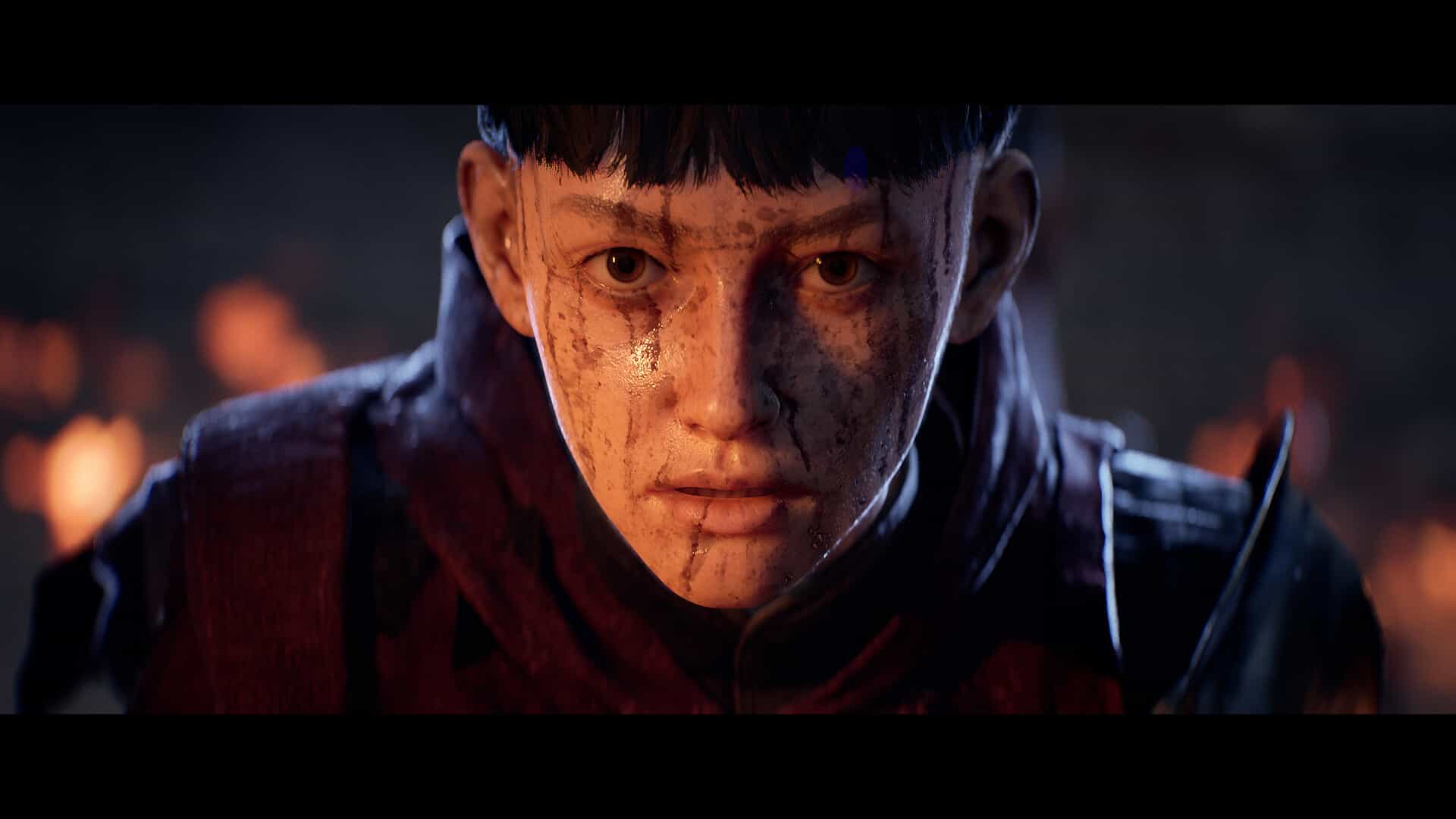
1348 Ex Voto promised a gritty dive into the Black Death's chaos, but it crumbles under its own ambitions. Sedleo's indie effort shines in historical details like accurate plague symptoms and a lawless Italy, yet falters spectacularly in clunky combat and a shallow story. Is this a noble failure or just unfinished? Read on to see why we can't recommend it.

1348 Ex Voto is a third-person action-adventure game set during the start of the Black Death in 14th-century Italy. Developed by the Italian studio Sedleo and published by Dear Villagers, the game follows the journey of a knight-errant named Aeta. Since its release on March 12, 2026, the gaming community has reacted with a mixture of technical frustration and social controversy. We are reviewing this title to offer a fair look at where the development team succeeded and where the project failed. Readers should not expect a positive recommendation. However, we do recognize the visible effort of the people who created this experience. Because 1348 Ex Voto attempts to provide a realistic and immersive simulation of the Middle Ages, we are judging it by those specific standards.
In 1348, Italy did not possess a unified identity. The region was far removed from the era of the Roman Empire despite being its original home. Instead, the peninsula was a collection of independent city-states and territories surrounded by larger powers. To the north, the Holy Roman Empire claimed authority. To the east, the Eastern Roman Empire still existed as a continuation of the Roman state. Within Italy, the culture of knights and chivalry was not a native Roman development. These traditions were inspired by Frankish customs from the time of Charlemagne which eventually led to the structures of the Holy Roman Empire. This period of political division was also the moment the Black Death arrived in the region. The plague moved through trade routes and devastated the population of the Italian city-states. This specific historical moment of transition and death is the foundation for the game’s setting.
While the game emphasizes its realistic undertones, several creative choices contradict this goal. One prominent issue is the voice acting. We must note that the voice actors perform their roles with great passion and skill. However, the characters speak with British accents rather than Italian ones. While this is a common trend in medieval entertainment, it is extremely unrealistic for a game that presents itself as an authentic historical reconstruction. Furthermore, the game incorporates Arthurian legends into its narrative. It is historically plausible for 14th-century Italians to be familiar with these stories, as the Matter of Britain was widely known throughout Europe at the time. However, these choices suggest a conflict between the developers’ desire for historical truth and their reliance on established entertainment tropes.
The game does succeed in portraying the instability of the 14th century. During this period, the Pope did not reside in Rome. Instead, the papacy ruled from Avignon, France. This absence created a massive power vacuum throughout the Italian peninsula. Without the papacy to intervene or provide a central authority, independent city-states were left to struggle against one another. This environment allowed brigands to become extremely common. Mercenary companies often turned into bandits when they were not employed for war. The game correctly depicts a world where lawlessness is the norm. When the Black Death is added to this political chaos, the result is a society in total collapse. This aspect of the game’s world-building provides a realistic representation of the period’s misery.
For a deeper understanding of this political chaos, we recommend the Ted-Ed video regarding the history of the “three popes.” This resource explains the Western Schism, where multiple men claimed to be the rightful Pope at the same time. One lived in France while the others struggled for control elsewhere. This religious and political conflict ensured there was no central power to keep the peace in Italy. The absence of a single, respected papacy is a primary reason why mercenary companies and bandits operated with such freedom. We believe this historical context explains why the lawless world of 1348 Ex Voto is factually accurate.
The combat system in 1348 Ex Voto attempts to utilize Historical European Martial Arts but contains several inaccuracies. The protagonist uses a longsword, which is a two-handed weapon weighing between 1.5 and 1.8 kilograms. In the game, basic attacks are performed with one hand, while two hands are only used for specific heavy strikes. This is technically incorrect. While historical records show that a longsword can be used with one hand, HEMA practitioners know that using two hands is more efficient and less tiring. It also allows for faster attacks. The game depicts two-handed strikes as slower and more exhausting for the character, which is the opposite of physical reality. Despite these mechanical errors, the armor designs are very accurate and represent a high point for the development team. We also noticed that while the game attempts to simulate the timing and distance of real fencing, the experience is not necessarily enjoyable. Realistic immersion does not always translate to good entertainment. Games like Kingdom Come: Deliverance have struggled with this balance in the past. While some players enjoy the feeling of a realistic struggle, many prefer the fast and powerful movement found in titles like Elden Ring. In 1348 Ex Voto, the commitment to cinematic realism often makes the combat feel like a chore rather than a rewarding activity.
For those interested in learning more about the actual physics and techniques of medieval weaponry, we recommend the YouTube channel Skallagrim. This channel is run by an enthusiast who provides detailed analysis of Historical European Martial Arts and historical arms and armor. Skallagrim often reviews video games to discuss how well their combat systems align with historical reality. His content is a valuable resource for understanding why certain mechanical choices in games like 1348 Ex Voto feel incorrect to those familiar with real swordplay.
The narrative of 1348 Ex Voto focuses on the relationship between Aeta and Bianca. The game heavily implies that these characters are in a romantic relationship. While same-sex relationships were officially shunned during the 14th century, they were a documented part of the social reality. In fact, some Italian city-states established special courts specifically to investigate and prosecute these cases. The existence of these judicial bodies suggests that such relationships were common enough to require official policing. We do not find this narrative choice to be a factual error. However, the portrayal of Aeta as a knight-errant requires more nuance. Historically, women could not become knights because knighthood was a formal military role and a social rank reserved for men. There are documented cases of exceptional women who took up arms to defend their properties and families during times of crisis. These women could be considered warriors in a practical sense, but they were never granted the official title of knight. The game chooses to bypass these social restrictions to create a cinematic protagonist. While this decision allows for a more personal story, it is a departure from the rigid social structures of the time period.
While the story is advertised as a personal adventure, it feels shallow in its execution. The pacing is slow, but the actual content of the narrative is thin. Many segments of the game feel more like a side quest from an open world title than a primary storyline. 1348 Ex Voto is a linear game, but linearity does not justify a one dimensional plot. There is a lack of narrative depth that makes the experience forgettable. The script relies heavily on drama and romance, which results in a tone similar to romantic fanfiction set in medieval Europe. We are not opposed to romantic themes, but the story could have been much better. It is too short and fails to explore the complexities of its characters or the world they inhabit. Because of this lack of depth, the game does not offer a reason for players to return for a second or third playthrough.
A personal adventure is not a bad concept for a video game. We have seen titles like Ghost of Tsushima succeed by focusing on a personal story. In that game, the journey of Jin Sakai allows the player to see the direct effects of their decisions and actions on the world. However, 1348 Ex Voto fails to provide this same sense of agency. Although it is advertised as a personal story, it lacks the interaction required of the medium. In comparison to successful personal adventures, 1348 Ex Voto feels more like a movie than a game. There is no depth to the character growth. The lack of interactive impact makes the slow story feel like a passive experience.
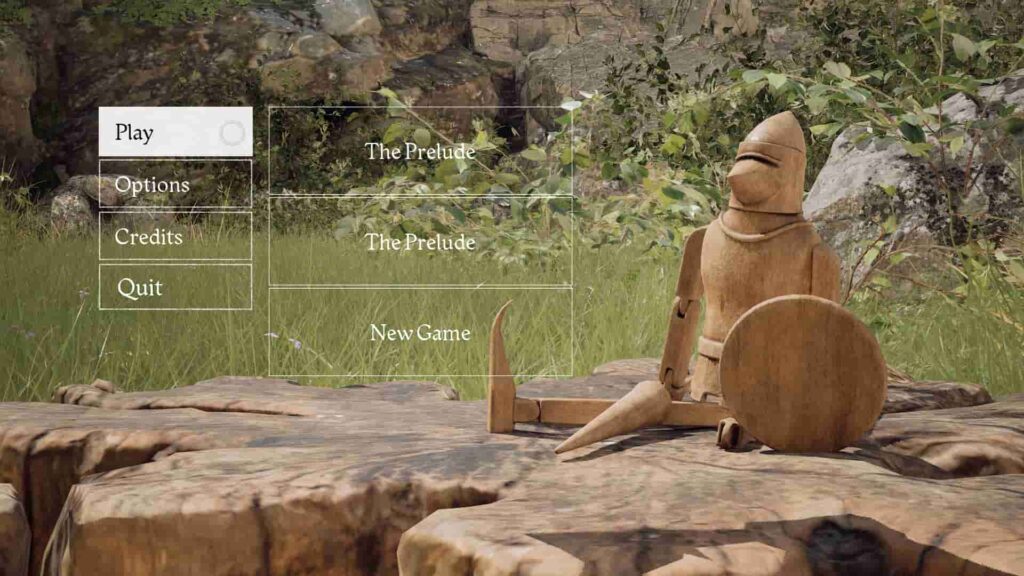
The technical state of the game is another area where the experience fails. We encountered numerous bugs that disrupted the gameplay. While these glitches may vary from one player to another, their presence indicates a lack of polish. Beyond the bugs, the user interface is poorly designed. The menu system is particularly problematic. It uses plain white text with white borders against a bright background when starting a new game. This creates a lack of contrast that makes the text almost impossible to see. The overall user interface feels lazy and overly simple. It does not reflect the high level of detail found in the character armor or the historical setting. These minor technical details contribute to a feeling that the game was released before it was fully finished.
We do not believe 1348 Ex Voto is worth buying for the majority of gamers. A great game is usually built on three pillars: combat, narrative, and graphics. In this title, all three pillars suffer from significant failures. The combat is mechanically incorrect and frustrating. The narrative lacks depth and feels like a passive film. The graphics are hindered by poor UI design and technical instability. While some specific groups of players may find interest in the setting, the game does not meet the standards expected by most people. Being an indie studio is no longer an excuse for poor design. We have seen other small teams create masterpieces like Clair Obscur: Expedition 33. If the developers at Sedleo want to succeed in the future, they must learn from the mistakes made here. For most people, watching a full gameplay video on YouTube provides the same level of excitement as playing the game itself. There is very little reason to spend money on an experience that functions more as a movie than an interactive game.
We must be clear that these observations are not a personal attack on the developers. The negative reception of 1348 Ex Voto will put significant pressure on the studio. In our opinion, this pressure is necessary for the betterment of both the studio and the gaming industry. It is important to require that studios produce high quality games and reliable services. This standard should be a normal expectation for any product released to the public. We wish the developers well and hope they learn from the results of this game. We are curious to see if they will develop a better product in the future. We advise the studio to be cautious in their future designs, but we remain firm in our assessment of their current failure.