Highguard is Officially Shutting Down After a Disastrous Launch
Highguard is officially shutting down. We take a closer look at why this is happening and what led to its closure, while exploring the lessons developers can learn from its journey. Understanding where things went wrong can offer valuable insight into game design, audience engagement, and the risks of relying on familiar formulas.
Wizzie
Hey, I’m Wizzie. I’ve been gaming since I was five, with a love for MMOs and SciFi that’s only grown since. I run Niteforge as CEO and Editor-in-Chief. Let's talk! wizzie@niteforgestudios.com
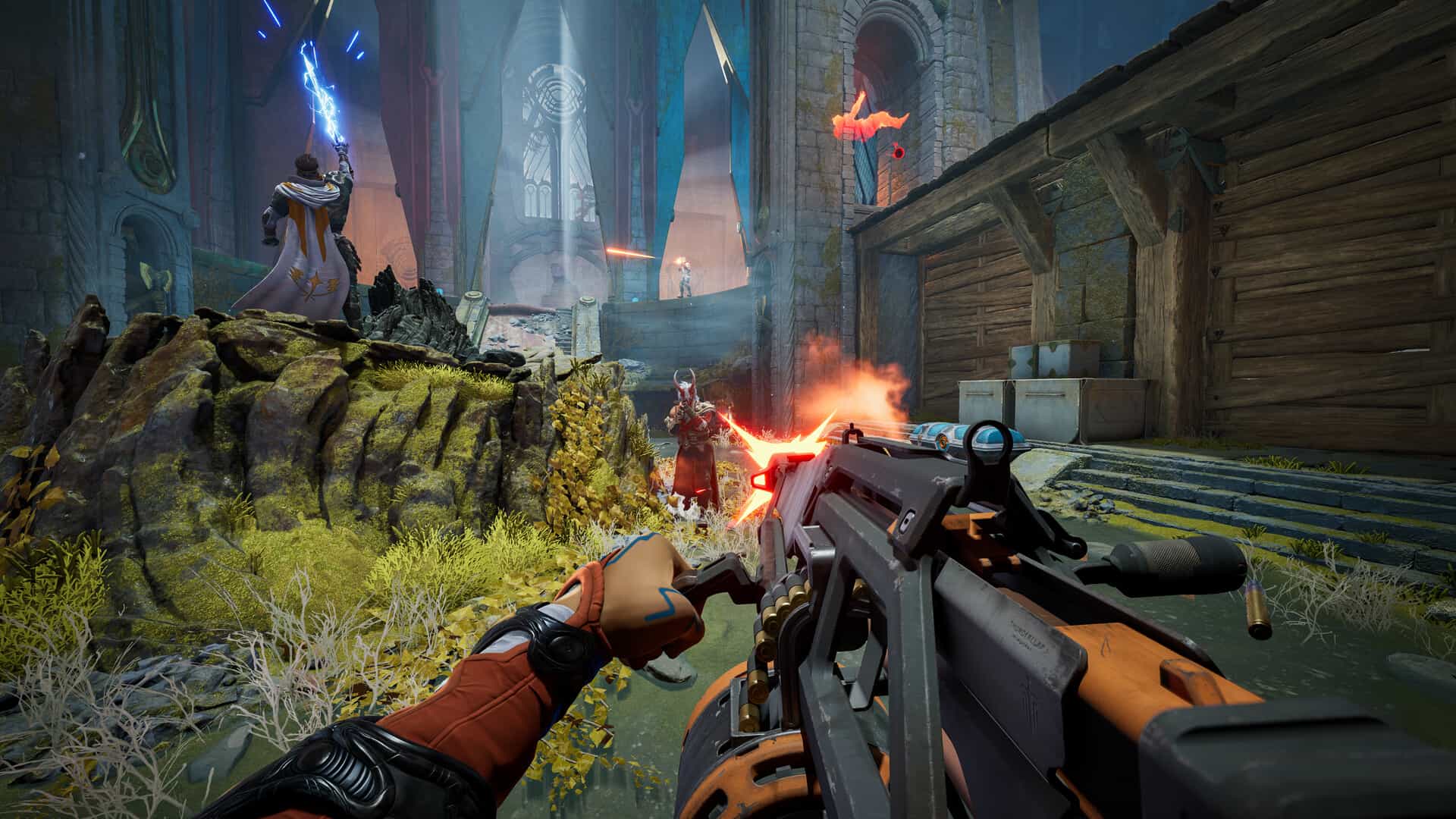
The permanent decommissioning of Highguard on March 12 2026 marks one of the most rapid collapses in the history of the modern gaming industry. Existing in a live state for only forty five days, the project transitioned from a premier reveal at The Game Awards to total infrastructure removal with a velocity that has stunned both players and market analysts.
The official timeline for the project began with a reveal at The Game Awards in December 2025, where it occupied the final world premiere slot. The title launched on January 26 2026 across PC and console platforms. Although Wildlight Entertainment reported an initial reach of over 2 million players and a peak concurrent user count on Steam of nearly 100,000, the engagement metrics were unsustainable. Analytical data indicated a 90 percent drop in the active Steam player base within the first seven days of availability. This rapid decline led to an official shutdown announcement on March 3 2026, with the servers scheduled for permanent decommissioning on March 12 2026.
Highguard World Premiere Trailer from The Game Awards 2025
Wildlight Entertainment was founded in 2021 by veterans of Respawn Entertainment who sought to replicate the viral success of Apex Legends. The studio utilized an incentive heavy structure to recruit elite talent, positioning itself as a high pedigree independent entity. However, internal documentation reveals that the project suffered from a significant identity crisis long before it reached the public. For two years, the team developed a survival sandbox influenced by the mechanics of Rust. By early 2024, leadership executed a major pivot toward the raid shooter genre. This move was intended to salvage existing assets after the original survival scope was deemed unmanageable.
The marketing strategy for the title was equally ambitious and ultimately flawed. Wildlight attempted to mirror the 2019 shadow drop of Apex Legends by launching shortly after a surprise reveal at The Game Awards 2025. This approach bypassed public beta testing in favor of generating immediate viral hype. We have observed that this strategy ignored the fundamental shift in the 2026 market landscape. Unlike 2019, the current environment is saturated with forever games that command total player attention.
SO, WHY IS IT SHUTTING DOWN?
The financial architecture of Wildlight Entertainment provides the most sobering lesson for the industry. While projecting an image of independence, the studio was quietly funded by Tencent through its TiMi Studio Group subsidiary. This arrangement relied on a performance contingent model where funding was tied to achieving strict benchmarks for player retention and monetization conversion. When the day fourteen retention targets were not met, Tencent exercised its right to pull all financial support. This immediate withdrawal led to mass layoffs in February 2026, reducing a workforce of over 100 employees to a skeleton crew of fewer than 20 developers.
The final weeks of the studio have been defined by a sense of professional mourning. The remaining staff, despite knowing the servers would be shut down, dedicated their final days to releasing a farewell update. This ghost patch introduced the Warden Koldo, a character whose lore as a soul trapped in a suit of armor serves as a thematic anchor for the hollowed out state of the studio. The release of this content, along with account progression up to level 100 and new skill trees, represents a final gesture to a community that will lose access to the digital infrastructure in less than a week.
Comparing Highguard to the 2024 failure of Concord reveals a new level of volatility. While Concord was a premium priced product that failed to gain initial traction, Highguard reached nearly 100,000 concurrent users on Steam and still could not survive. The barrier to entry in the live service market is no longer just about the initial purchase price or the quality of the developer pedigree. It is about the ability to sustain a massive, dedicated player base against established giants from day one. In the current climate, even a successful launch can lead to termination if the retention metrics do not meet the high expectations of global conglomerates.
Highguard’s final update arriving soon. Thank you for playing with us.
Today we’re sharing difficult news. We have made the decision to permanently shut down Highguard on March 12.
Since launch, more than 2 million players stepped into Highguard’s world. You shared feedback, created content, and many believed in what we were building. For that, we are deeply grateful.
Despite the passion and hard work of our team, we have not been able to build a sustainable player base to support the game long term. Servers will remain online until March 12th. We hope you’ll jump in with us one more time to show your support and get those final great matches in while we still can.
The team is excited to release one final game update to enjoy in the remaining life of the game. We’ll be adding a new Warden, a new weapon, account level progression, and skill trees! Full patch notes are coming, and we’re targeting tonight or tomorrow morning for patch release.
From all of us at Wildlight, thank you for playing, for supporting us, and for being part of Highguard’s story.
– @PlayHighguard / x.com
Wildlight has stated that the reason for the shutdown is their inability to build a sustainable player base. This does not, however, line up with one of the statements made by co-founder Chad Grenier:
Whether it gets a thousand people or a hundred million people, it doesn’t matter. What matters most is that the game is loved by the people who played it.
– Chad Grenier / Speaking to Polygon
Following the poor player retention metrics recorded in the weeks after January 26, Tencent opted to pull all financial support. This decision led to an immediate structural collapse within Wildlight Entertainment. In February 2026, the studio conducted mass layoffs, reducing the workforce from over 100 employees to a skeleton crew of fewer than 20 developers. During this final phase, the remaining staff were limited to maintaining the servers and releasing content that was already nearing completion. This included the release of the final Warden, Koldo, whose lore as a soul trapped in a suit of armor served as a thematic anchor for the hollowed out state of the studio.
A LESSON FOR GAME DEVELOPERS
Highguard’s shutdown shows that not every game, no matter the resources behind it, can find its place in a crowded market. For developers, the lesson is clear: execution matters more than ideas, understanding your audience is everything, and relying on the same formula as other games is risky. We have only seen a handful of games succeed by following a formula that worked elsewhere, like Marvel Rivals taking on the Overwatch formula, but most attempts fail. A game that doesn’t engage players, fails to keep them interested, or misses what people actually want has no chance to survive. Highguard reminds us that building a game is not just about making something that looks good or sounds fun on paper. It is about making something that works in practice, reaches people, and gives them a reason to come back. Planning for sustainability, keeping a realistic scope, and constantly evaluating whether your game delivers value are what separate games that last from those that quietly disappear. In the end, even good intentions cannot replace solid execution, a clear connection to your audience, and the courage to break away from tired formulas.